Author: Michael McCrystal

  • Youth Education and Leadership

    Youth Education and Leadership

    Since 1995, Nalamdana has been supporting students from economically challenged backgrounds, to help them complete their high school, under Nalamdana’s Youth Education and Leadership Program.

    The funding for this Youth Education and Leadership Program comes from individual donors, as well as from foundations and corporate organizations. Asha for Education, U.S. Chapters, have supported students on this program continuously from 1999 to 2009!

    Deserving students are selected through a rigorous selection process, which includes interviews with the child as well as their families, screening of the student’s school performance records and a house visit to verify the facts. Students, who come from financially challenged backgrounds yet, show good interest in education and signs of good communication and leadership skills are selected.

    Beyond providing monetary support, this program also strives to contribute to their holistic development as young adults. Different skill building workshops are conducted during their school holidays. These range from carpentry skills, arts and crafts, to spoken English and computer skills.

    The students are also taken on a field trip/camp every year. Career guidance is provided where possible. These students are also encouraged to give back to their communities in some way while keeping their school grades up.

    The Youth Education and Leadership Program has been running successfully for 15 years now, and many of the supported students have gone on to become professionals in their chosen field. Some of the students who are well placed have now come forward to support scholarship students. You can learn more this program by reading the Youth Education and Leadership Program Annual Report, 2010 – 2011 attached below or visiting the Project Page about it on this website.

  • Help Stop Child Abuse!

    Help Stop Child Abuse!

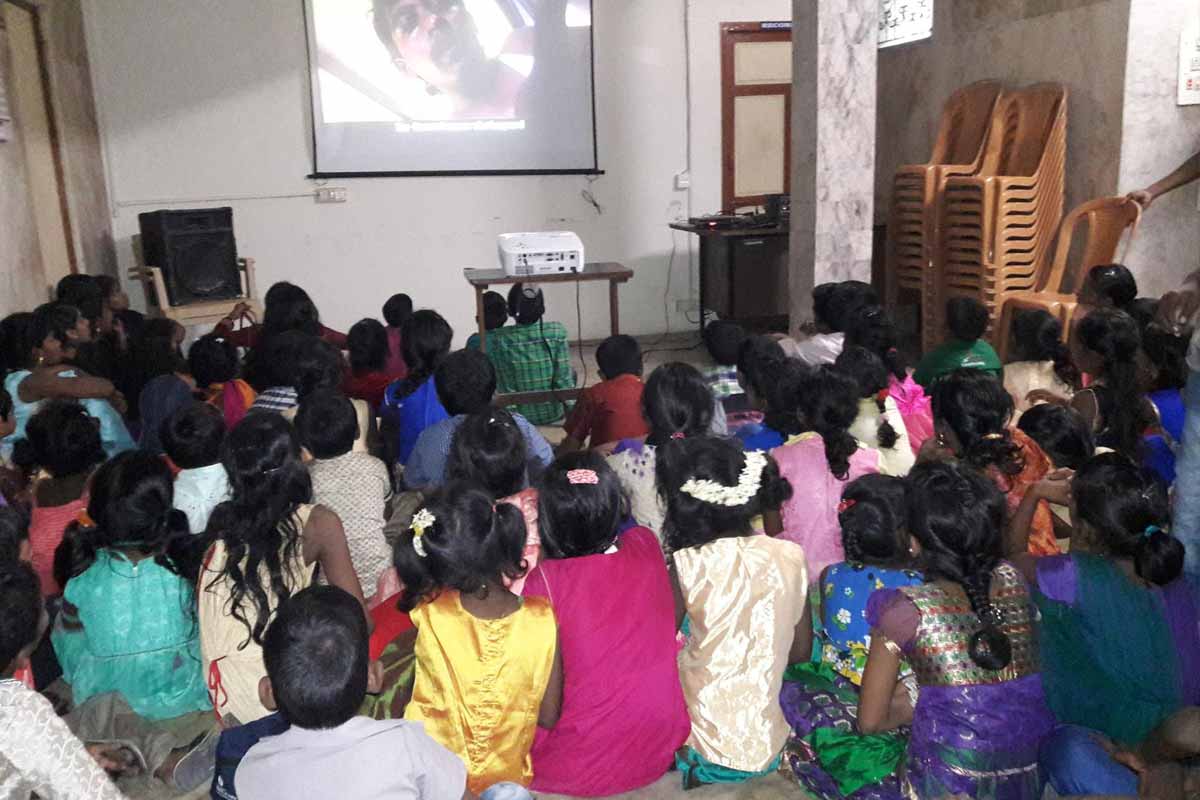
    safeChNewsNalamdana’s special short feature film in Tamil, Maaya Changu (Magic Conch Shell), teaches children, parents, care givers and general public about child rights and child safety. The story that is crafted in a sensitive, age-appropriate and entertaining manner helps children understand how to avoid being abused and exploited. It also helps caregivers and parents learn how to listen to their children when they are trying to tell them something is wrong and also to address and report child abuse.

    Certified and cleared by the Censor Board, Maaya Changu also enjoys the distinction of a special commendation letter from them, citing that the film is cleared for both private and public viewing by all above 12 years of age, and children with adult supervision (so that the parents and caregivers also understand) if under 12 years of age.

    Key Messages
    This story is intended to raise awareness and understanding of key issues around child rights and covers the following:
    – Fundamental rights of the child related to personal safety
    – Good touch and bad touch
    – How a child can protect herself
    – How parents can protect their children and be aware if there is anything amiss
    – Helpline for child abuse (Toll Free 1098) and other available services

    Recently, the Nehru Yuva Kendra (NYK), Tamil Nadu chapter, after viewing the film has asked Nalamdana for 6200 (one for each of the 200 youth clubs in 31 districts) copies for screening among their own network of youth all over Tami Nadu and Pondicherry.

    How Can You Help?
    Nalamdana is looking for active ways to distribute this excellent film throughout the Tamil speaking populations in India. We are looking for sponsors to assist in the following ways:

    Option A Sponsor 200 copies per district @ Rs.100 per DVD, and get your name and logo printed on the jacket. These will be distributed through the NYK route.

    Option B If you wish to sponsor screening in local schools /colleges, workplaces or communities, Nalamdana can work out a special project and do so @ Rs.3000 per screening, using LCD projector and speakers, and also display your banner in the venue. DVDs can be purchased at Rs. 100 per copy.

    The DVD price is negotiable on bulk orders. With the proceeds from the DVD, Nalamdana conducts further programming on child safety and lifeskills.

    Also, for those sponsors coming in with Rs.1,00,000 bulk copies we can include their advertisement or slide into the DVD before the film starts or at the end.

    About Nehru Yuva Kendra
    Nehru Yuva Kendra was started in 1972 by the then Ministry of Education with the objective of providing the non-student rural youth an opportunity to help themselves grow and get involved in nation building activities.

    In 1987, all the existing kendras under the NYK scheme were re-organized into an autonomous body that was formed by a resolution of Department of Youth Affairs. As a result of this endeavor, Nehru Yuva Kendra Sangathan (NYKS) was formed. It has since grown to have kendras in 501 districts of India with a network of about a quarter (0.25) million youth clubs in as many villages.

    Child Abuse in India – Shocking Facts

    According to a national study on child abuse, released in 2008, 53.22% of children all over the country (India) reported having faced one or more forms of sexual abuse.

    In spite of the above finding, mainstreaming sex education as part of life skill and child protection continues to elude the Indian school curriculum. Statistics from the National AID Control Organization (NACO) show new HIV infections are occurring among low risk, young women and adolescent girls. These vulnerable groups do not have the opportunity to learn/discuss issues on sex, gender and making informed choices.

    Statistics of the Prevalence of
    Sexual Abuse in India

    The first ever National Study on Child Abuse in April 2007, covering 13 states in India and a sample size of 12,446 children was released by Minister for Women and Child Development showing these stark reality figures:
    More than 53% children report facing one or more forms of sexual abuse
    Almost 22% faced severe sexual abuse, 6% sexually assaulted.
    50% of sexual offenders were known to the victim or were in positions of trust. (family member, close relative, friend or neighbor)
    5-12 years group faced higher levels of abuse, largely unreported
    Not just girls but young boys are also at risk.
    Severest sexual abuse in age group of 11-16 years.
    73% of sexual abuse victims were in age groups of 11-18 years.

    Tulir – CPHCSA’s study in 2006, conducted among 2211 school going children in Chennai, indicates CSA prevalence rate of 42%. Children of all socio economic groups were found to be equally vulnerable. While 48% of boys reported having been abused, the prevalence rate among girls was 39%. 15% of both boys and girls had been severely abused.

    Survey conducted in India in 2001 by Save the Children, Sweden found that:
    68% had faced physical abuse
    46.6% faced severe abuse leading to injuries
    32.2% had their private parts touched by the abuser
    and 20% were forced to have sexual intercourse

    In a survey with 350 school girls in New Delhi by Sakshi in 1997, 63% had experienced CSA at the hands of family members; and 25% of the girls had either been raped, made to masturbate the perpetrator or engage in oral sex.

    Another 1997 study on middle and upper class women from Chennai, Mumbai, Delhi, Kolkata and Goa by RAHI revealed that 76% of respondents had been sexually abused as children, with 71% been abused either by relatives or by someone they knew and trusted.
    Samvadas’s 1996 study of students in Bangalore states that 47% of the respondents had been sexually abused; 62% of whom had been raped once and 38% of whom had suffered repeated violations.

    For more information visit the Arpan website http://www.arpan.org.in/csa.html

  • Gender Sensitive HIV-TB Program funded by World Health Organization

    Gender Sensitive HIV-TB Program funded by World Health Organization

    The WHO-SEARO Gender Sensitive Project Grant helped Nalamdana connect three more wards to the cable radio on campus, where only HIV positive women patients were interned for fifteen days at a time, to receive the free ART treatment.
    It also funded regular group meetings for the women patients and paid the salary of one special women counselor who helped them through the difficult period of adjustment.

    pic1

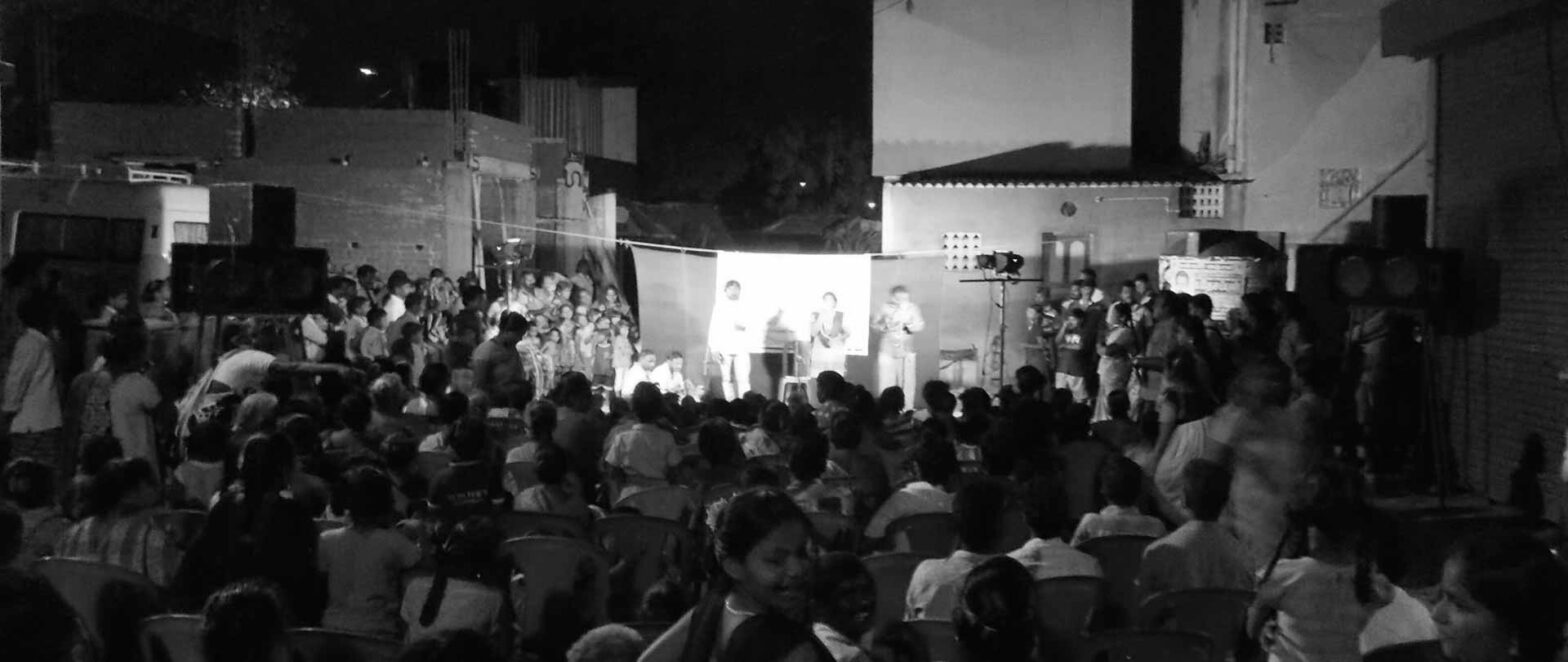
    MASA2NewsThe Nalamdana team was already doing monthly drama’s and roving street plays around this largest hospital in Asia, to reach the thousands of patients treated here each month. This grant also helped the Nalamdana actors create special scripts sensitive to women’s needs.

    Nalamdana had applied for a short term grant and was approved by World Health Organization /South-East Asia Regional Office (WHO/SEARO) to create a gender sensitive programming through participatory, innovative communication at Nalamdana’s ongoing project site – the largest Government Hospital where free ART and TB treatment is given to men, women and children at Tambaram, on the outskirts of Chennai, Tamilnadu.

    The Nalamdana “Are You Well” program’s main objective was to:
    – strengthen the women’s component of the program by connecting the TB women’s wards that are were unconnected to the cable radio
    – create a special gender-curriculum of messaging over the cable radio to specially address the practical and psycho social issues faced by women and include FGDs and support group meetings for women on campus
    – continue with direct interpersonal counselling, which will help to empower them and bring women on par with the men receiving these programs.

  • The Hindu reviews Pesu Maname Pesu

    The Hindu reviews Pesu Maname Pesu

    logo

    http://www.thehindu.com/todays-paper/tp-features/tp-sundaymagazine/no-more-a-taboo-on-celluloid/article918724.ece

    No More a Taboo on Celluloid

    Gokulnath A., Sathyaraj Venkatesan

    “Pesu Maname Pesu” is a one-hour Tamil Tele film by ‘Nalamdana’, a non-profit organisation based in Chennai. Produced on a low budget, the telefilm in two parts narrates the story of a young girl, Karpagam, who is forced to enter into a marriage with Kumaresan without her family insisting on an HIV test. A year later, when Karpagam undergoes clinical tests, the doctor finds that she is pregnant and also discloses that Kumaresan is HIV-positive. The film through its realistic portrayal of rural India emphasises the need for mandatory HIV/AIDS test before marriage to avert the possible spread of HIV/AIDS.

    The success of such short/tele films again reinforces the need for such initiatives. With no permanent cure yet in sight and stigma still attached to the syndrome, such ventures will help to dispel discrimination against the PLWAs. As such, lLiterature and mass media, especially cinema and short/tele films, is an effective tool as Paul Reed argues “to alert people”, “to explore multi-facets of the epidemic” and “to educate” the general ‘unaffected’ population about HIV/AIDS.

  • Times of India – They’re Playing My Song, Doc

    Times of India – They’re Playing My Song, Doc

    ,TOI Crest | Jan 30, 2010, 11.43 AM ISTAIDS-centre
    Original Article online here

    Mondays are for tuning into memorable melodies. Tuesdays are when romantics get their fill of mushy love songs. Wednesdays are reserved for the latest chartbusters . Folk numbers fill the air on Thursdays. Fridays are the much-indemand ‘Your Choice’ days while Saturdays are for movie soundtracks. A week passes in a breeze for HIVaffected persons at India’s largest AIDS care centre in Chennai. Literally. ‘Thendral’ (breeze in Tamil), the daily cable radio programme, fills wards and an outpatient wing with film songs interspersed with nuggets of information.

    An initiative of the NGO Nalamdana, Government Hospital of Thoracic Medicine (GHTM) and Tamil Nadu State Aids Control Society, the project uses a public address system to educate and entertain HIV-affected and TB patients with low literacy levels. The programmes reach anti-retroviral treatment (ART) and TB wards daily.

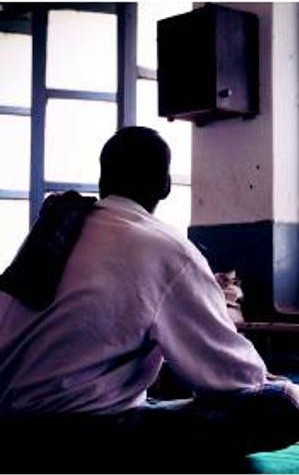
    At ward no 3, a gaunt figure keeps adjusting the speaker volume on a balmy Tuesday afternoon. Love songs are in the air, and Rajan, an inpatient , misses his wife and children though he is set to leave for his hometown as soon as he completes a 15-day ART module.

    “The radio is good, especially in the afternoons after the doctors have come and gone. Every day there are different songs and lots of information ,” he says. Once the doctors’ rounds are over, Rajan and others in the male ward huddle around the speakers, one for every three beds. “I just heard how important it is to bathe twice a day in warm water and trim my nails. They also said on the radio that I should stay away from my kids if I have a TB infection,” says Rajan.

    Thendral broadcasts are a curious mixture of movie songs, especially composed jingles and information modules with hospital staff pitching in as on-air personalities . “GHTM is a huge campus. Whatever I want to tell my patients about nutrition, I can do that via the Thendral broadcast,” says dietician K Devika.

    The cable radio, launched in 2005, started with seven ART wards for two hours a day. Now, it broadcasts for four-and-a-half hours, six days a week, and covers 16 TB and ART wards, the ART out-patient wing and the children’s ward.

    A recent evaluation of the project by various stakeholders indicates that patients relate more directly to the songs on radio, and the receipt of valuable information . Doctors have “noticed patients recalling and referring to what they heard,” notes the evaluation study.

    India has nearly 2.5 million people living with HIV and AIDS. The first AIDS case in India was reported in Tamil Nadu in 1986. Estimates indicate that the epidemic has stabilised or seen a drop in Tamil Nadu and other states. HIV prevalence continues to be higher among vulnerable groups. More than 200 hospitals run ART departments that have community care centres attached to them.

    Staff nurse, P Anita, says the Thendral messages catch on better as they are in Tamil. “In the female ART ward, most of them know about the importance of avoiding breast-feeding to prevent parent-to-child transmission . The jingles on regular medication are all in simple Tamil.”

    Initially, GHTM had street theatre sessions and plays conducted by Nalamdana to improve HIV awareness. “The Q&A session with senior doctors after the play got so intense that we decided to have an in-house radio to address patients’ doubts,” says superintendent, Dr C Chandrasekar . GHTM is the largest AIDS care centre with at least 400 HIV in-patients visiting the separate pre-ART clinic department daily and over 300 patients undergoing in-patient treatment in 11 exclusive HIV wards.

    The suggestion for a cable radio came from Nalamdana project director, R Jeevanandham, who saw in the PA system the possibility of using music as therapy and easy information dissemination about health and hygiene practices.

    Once government approval came through, Nalamdana staff got busy converting a portion of the old hospital complex to a compact state-of-the-art studio. “We developed our own programming. Now, NGOs on the premises use Thendral to come up with modules on nutrition,” says Nithya Balaji, executive trustee of Nalamdana.

    The broadcast includes songs written by doctors, counsellors and staff of the Indian Network for People Living with HIV/AIDS like V Bhagyaraj, whose song is a lilting folksy number asking HIV-affected to live their lives without anger and addiction.

    There are also minor altercations when seasoned Thendral-listeners object to new patients spitting. “Old inmates repeat what they heard on the radio and get agitated when newcomers cough and spit in the open. Sometimes we do have to interfere,” says a doctor, laughing . Jokes apart, all the stakeholders say there should be more programmes and a lot more wards connected to the radio. “There is one nurse for around 40 patients and one social worker has to give information to 100 patients a day. Doctors and medical staff, who do the Q&A for Thendral every week, are overworked. It will make a huge difference if there are qualified people to spend more time with patients,” says a senior medical official.

    sandhya.soman@timesgroup .com

  • The Hindu: Through the Looking Glass to benefit Nalamdana

    The Hindu: Through the Looking Glass to benefit Nalamdana

    http://www.thehindu.com/todays-paper/tp-features/tp-metroplus/through-the-looking-glass/article404710.ece

    Through the looking glass

    Perch stages two plays by one of the sharpest social commentators of his time, V.M. Basheer

    To portray onstage, the complex works of Vaikom Muhammad Basheer, the Padma Sri award-winning novelist, known for his whimsical humour, idiosyncratic characters and sharp social commentary, is no easy task. Perch, the Chennai-based theatre group, takes on the challenge, staging two English plays, Moonshine and Skytoffee and Sangathi Arinhya! (Have you heard!), at the Koothambalam Auditorium in Kalakshetra. They will be on November 21 and 22 respectively, at 7.15 p.m.

    Moonshine and Skytoffee is the amalgamation of two of Basheer’s humorous love stories, The Love Letter and The Card-Sharp’s Daughter. Sangathi Arinhya! (Have you heard!) is an adventurous combination of seven of Basheer’s stories, with themes ranging from love to nostalgia, war to political satire, and humour to pathos.

    Both plays were part of ‘Under the Mangosteen Tree’, a festival organised by Perch in Chennai to pay tribute to Basheer in his centenary year in 2008. Since then the plays have toured the country extensively. This time, they are being staged as part of the annual fund-raiser ‘Kutti Karanam’, to aid the children’s projects of the Nalamdana and Aseema trusts, both NGO’s with over 15 years experience in working with children in the areas of health and education through the medium of the arts and theatre.

    For more information, call 98414 96723 / 98410 09927.