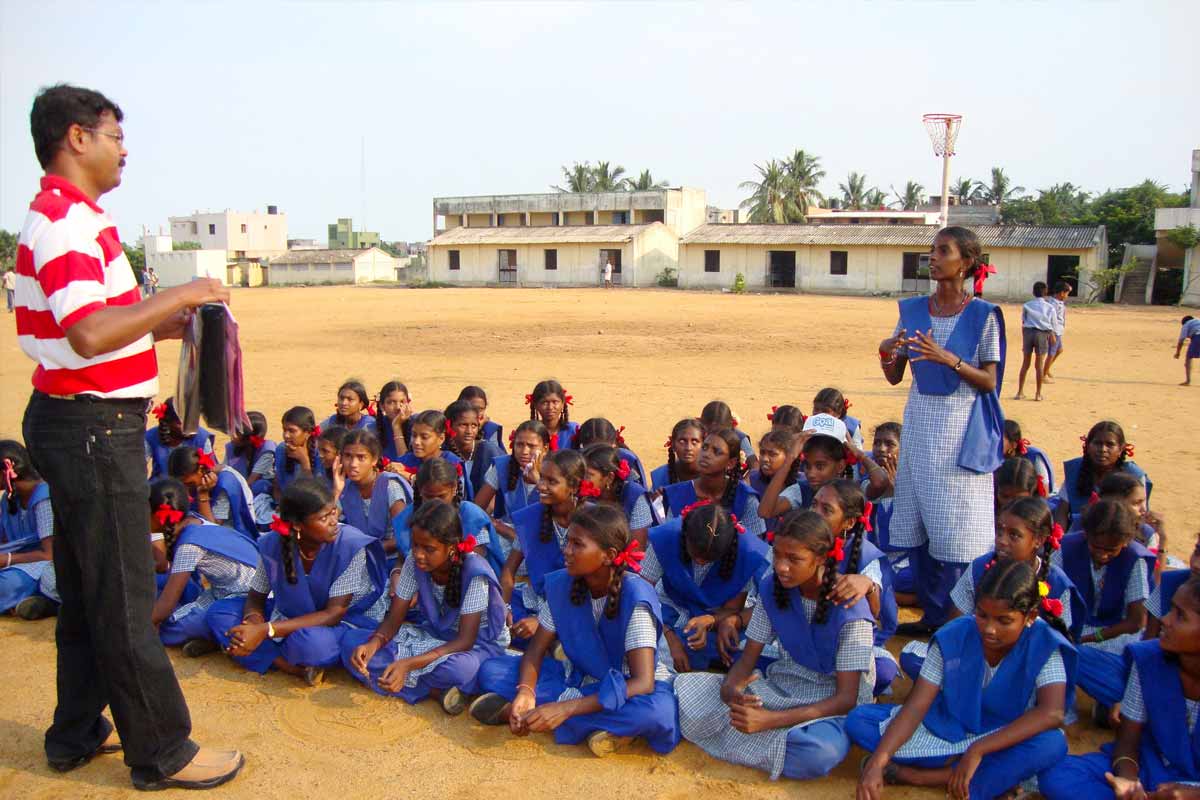
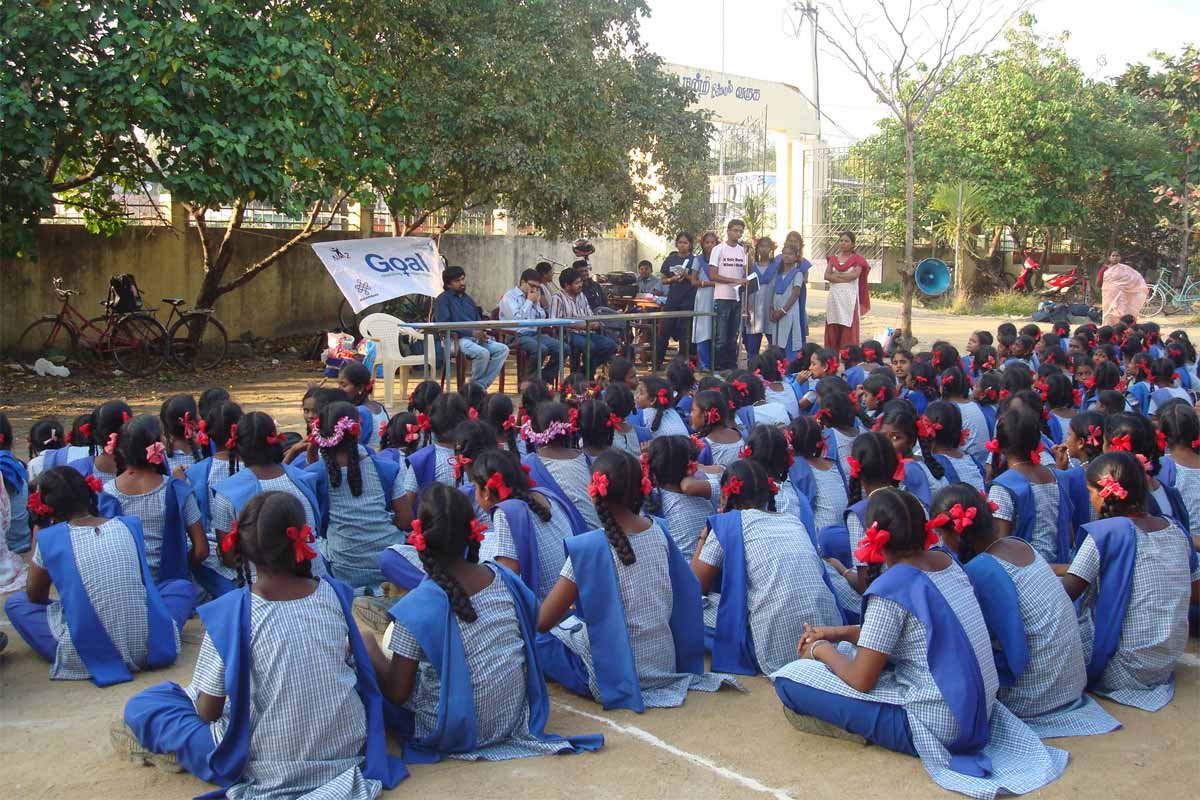
Informative: Students of the Corporation High School, Adyar, at the cultural show held as part of the ‘Safe child’ project in Chennai on Friday.
Staff Reporter
Students of Corporation High School, Adyar entertain, educate their peers
CHENNAI: They stayed back after school hours, but seemed thoroughly pleased to do so. Students of the Corporation High School, Adyar, were treated to an interesting cultural show by their peers here on Friday.
It was held as part of ‘Safe child,’ a project of non-governmental organisation Nalamdana that works in the area of spreading awareness of social issues using the arts as tools of communication.
Through ‘Safe child,’ a project funded by Singapore-based Art Venture, Nalamdana trains students on various communication skills. In south Chennai, the NGO has identified three schools to start with.
“The children use these skills in art forms or other forms of expression, to articulate various social messages,” said M. Sampath, project in-charge.
Volunteers of the NGO have worked with a group of children of this school for nearly ten days. “We also used content from a work book prepared by Tulir [an NGO], to highlight ways to take care of one self,” said J. Bama, programme assistant.
Basic child rights, different types of abuse and self-protection are among the topics covered in these modules. Children are also informed about the child helpline – 1098.
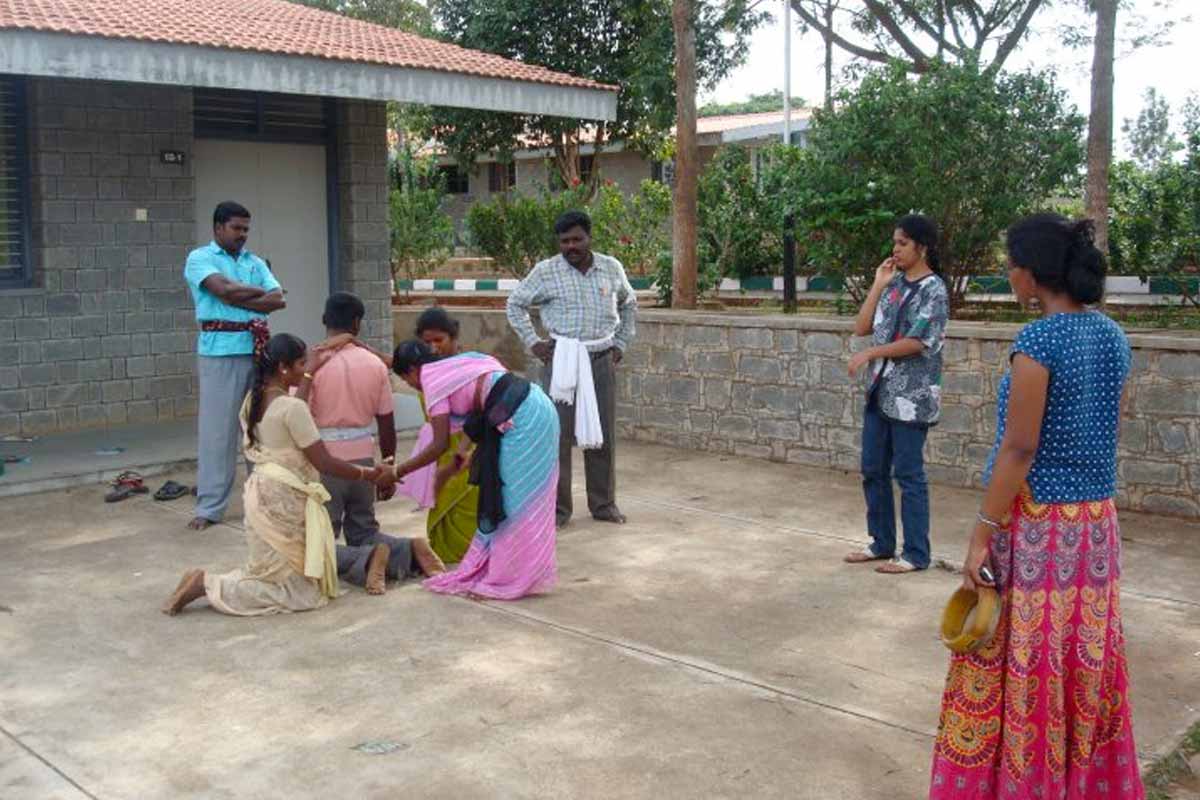
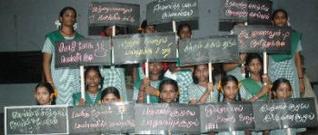
Using the training and skills obtained, students of the school put up a cultural show that included song, dance, brief speeches and visual depiction of ideas on charts and posters. A dance item presented as part of Friday’s cultural show outlined a message on how children should take care of their body and mind to lead a happy life.
Such programmes would give students good exposure to a range of issues, headmaster of the school SK. Jayaram said.
For a healthy body, mind and soul
http://www.thehindu.com/todays-paper/tp-features/tp-youngworld/for-a-healthy-body-mind-and-soul/article1444140.ece
All about cleanliness : A message for all.
ROHINI RAMAKRISHNAN
Using traditional performing arts, kids learnt some lessons on life.
The banner that adorned the backstage wall was made of old newspapers stuck together on an old saree, and was outlined in ochre and maroon. The Tamil alphabet was written large at random. This was the collective work of 35 children at the workshop and by doing this they learnt the art of recycling.
Song and dance
Paintings that were done by the kids in the craft class with flowers, leaves, sand and paint were hung between two trees in the tree-studded campus of Avvai Home in Adyar. The Aseema Trust in their project “South Indian Girl Child Initiative Project” brought out the third phase “Using Traditional Performing Arts as empowering tools for vulnerable youth” with the theme “Health and Hygiene” for 2008.
During the summer vacation these children participated in the workshop that had diverse events with the same theme and what they had learned was displayed.
They began the day’s programme with a song taught by Sudha Raja with a message on cleanliness. Toilets must be built and people taught to use them properly, garbage should be dumped inside the bin and not around it, as pavements are meant for walking, they should be kept clean and free from any kind of obstacles, were some of the messages in the song. As dance is an activity that inspires a person to keep the mind as well as the body clean, the children were taught Mohiniattam by Supriya Rajan. The swaying movements were done with much concentration and the children’s enjoyment was obvious.
And to sharpen the mind the mathematical way the kids had a taste of Konnokkol by Uma Shankar Vinaykram who had the whole school and the visitors keeping time to the ancient beats. Chandra and Bama who trained the children to put up the play “Nalamdana” — the message again concentrating on hygiene. Sensitive issues like disposing used sanitary napkins, the importance of food and the confidence to make the right choices in life formed the basis of the play.
The workshop had infused in the children a zeal to keep their environment and themselves clean and healthy in all aspects but their performance that evening had inspired other young minds too as little Suganya said, “We will do all what our akkas said (as in the song and drama) because it will make us strong and make us study too!”
2008) Sponsored by UNICEF, Chennai – Nalamdana toured over ten villages in the Krishnagiri District of Tamil Nadu during September and October 2008. Special drama’s on basic sanitation, hand washing, use of toilets and proper storage and use of water have been the key messages conveyed through a new drama. Theatre training and workshops for local youth were planned under this project.
Funded by UNICEF Chennai – Nalamdana’s Theatre Training Camps are for college and school students as well as community groups. Nalamdana’s core team of experienced actors trains young people in using theatre as tool to address social and health issues.
UNICEF Chennai funded Nalamdana to train about 100 village volunteers (young men and women) through 2008 and 2009 in the Krishnagiri District of Tamilnadu, which is one of the backward regions in our state. These trained teams have been performing in their village taluks – producing 8 to 10 programs per month August through December 2009. These teams of trained actors can now develop their own programs, creating their own scripts on issues of concern to them.
Nalamdana will continue to seek funds to support these teams. Training workshops for other groups take place based on funds availability. This program is an ongoing one and will continue through 2010 and further depending on funds.
The long silence about child sexual abuse seems to be breaking
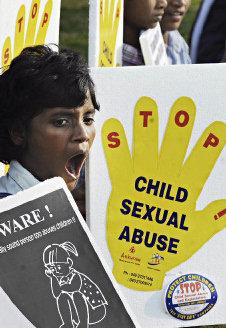
You have to live in an opaque, sound-proof bubble to deny child sexual abuse (CSA) exists. Hard-drives of documented cases are available with NGOs working in this field (you don’t want to read them). Reports from the media, UNESCO and the government are awash with evidence. The long silence and denial about CSA seem to be breaking. It is mainstream, occupying public and political space. You can’t argue the need for it.
Accept it, say the NGOs, and work to protect the child. Know the facts.
There’s a high percentage of child-trafficking in the sex trade. Paedophiles stalk websites in search of unwary, curious kids. Abusers target unsupervised children of busy parents, children from broken families. Children who run away from home (violence? drunkenness?) are specially vulnerable. Child labourers and street children are easy prey. There is CSA in middle and upper middle-class families; it just goes unreported.
Activists are taking the matter head-on. The Nalamdana troupe enacts plays to spread awareness. Tulir talks of safety through posters, billboards, illustrated do’s and don’ts in newspapers and advocacy; it works with sexually abused kids and their families, conducts training workshops.
Currently it’s campaigning for a legal definition of child pornography. Ashraya runs workshops in educational institutions and the Police Training College.
All of them distribute informative flyers and booklets among schools. Rotary Club has Project Selvi.
Language is an important component.
“It’s a sensitive topic,” said Nitya Balaji of Nalamdana. “So programmes have soft names – safe child, life skill teaching, adolescent health program. Do we talk to children about their physical and emotional changes in a scientific way?” Vidya Reddy of Tulir wants “shame” removed from the child’s awareness of his body. “Terms should be simple and age appropriate. Saying, ‘Don’t allow anyone to touch you,’ puts the burden of responsibility on the child. Say, ‘It is not all right for anyone to touch you except for medical reasons.’ Empower children. Their reporting is necessary to ensure their safety.”
Who is an abuser?
There are no psychological tools to profile them. “He could be the “nice” uncle in a stormy home,” said Nitya. “There are far more people with sexual interest in children than we can count,” warned Vidya. Abuse takes several forms and can happen under a parent’s gaze. Tickling and hugging can be unsafe for the child. “Abusers are manipulative and clever and abuse often goes on for years.” All children are at risk.
At what age should kids know?
“Good touch and bad touch at the primary level,” said Nandi Shah of Ashraya. “Body parts and functions at secondary, then sexuality, right to privacy, safety and choice. Parents, teachers, care-givers and counsellors should be sensitised and trained to support.” Nitya said, “People will take what they’re capable of. We should impart information in a non-sensational way.”
How does theatre help?
“Theatre has variety- such as role play, puppetry, story telling,” said Nitya. “Children could choose the issues, perform in different languages. Scripts could be based on first-hand stories. Theatre is most effective in schools with children from challenged homes/backgrounds.” A pre and post performance questionnaire gives direction to Nalamdana’s work. “But counselling by experts must follow.”
What can we do?
Nitya wants a children’s forum. “If children are trained to retort in groups, the abuser will be kept at bay. Why can’t TV serials mainstream the issue?” Ready and quick help when they need it, said Nandi. “Tell the abused child it is not her fault,” say activists. Listen when they complain, or they’ll clam up. The abuser is often someone the child loves and trusts or a person in authority. “Take it seriously, without showing alarm or distress,” said Vidya. “Respond calmly and do something about it.”
“Parents should create an atmosphere where the child feels free to talk without fear of ridicule or criticism. Schools must be pro-active on protection against abuse.
We need clear, stern laws and a child-friendly investigating system. Or we victimise the child many times over.” GEETA PADMANABHAN
 CHENNAI: They stayed back after school hours, but seemed thoroughly pleased to do so. Students of the Corporation High School, Adyar, were treated to an interesting cultural show by their peers here on Friday.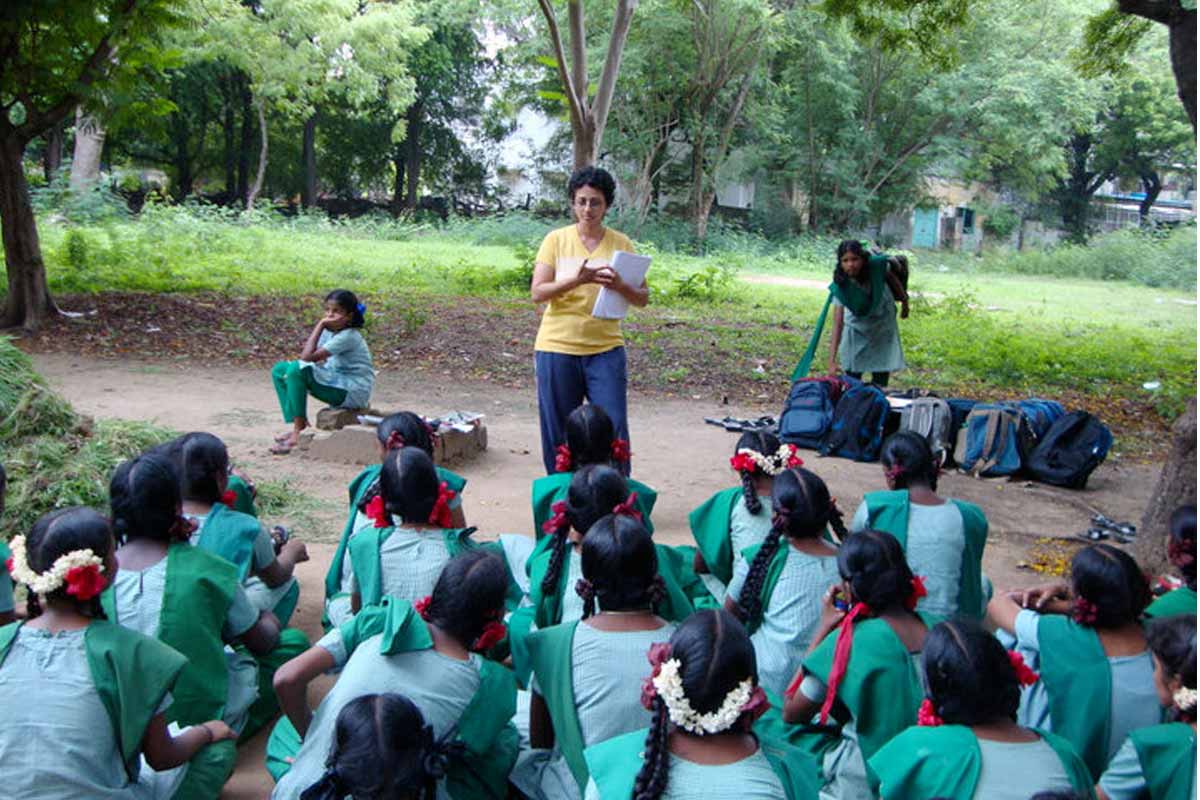
 The banner that adorned the backstage wall was made of old newspapers stuck together on an old saree, and was outlined in ochre and maroon. The Tamil alphabet was written large at random. This was the collective work of 35 children at the workshop and by doing this they learnt the art of recycling.