Category: News & Press

  • The Hindu: For a healthy body, mind and soul

    The Hindu: For a healthy body, mind and soul

    For a healthy body, mind and soul
    http://www.thehindu.com/todays-paper/tp-features/tp-youngworld/for-a-healthy-body-mind-and-soul/article1444140.ece

    All about cleanliness : A message for all.

    ROHINI RAMAKRISHNAN

    Using traditional performing arts, kids learnt some lessons on life.
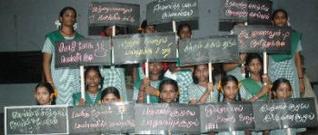
    2008070850080601_473411eThe banner that adorned the backstage wall was made of old newspapers stuck together on an old saree, and was outlined in ochre and maroon. The Tamil alphabet was written large at random. This was the collective work of 35 children at the workshop and by doing this they learnt the art of recycling.

    Song and dance

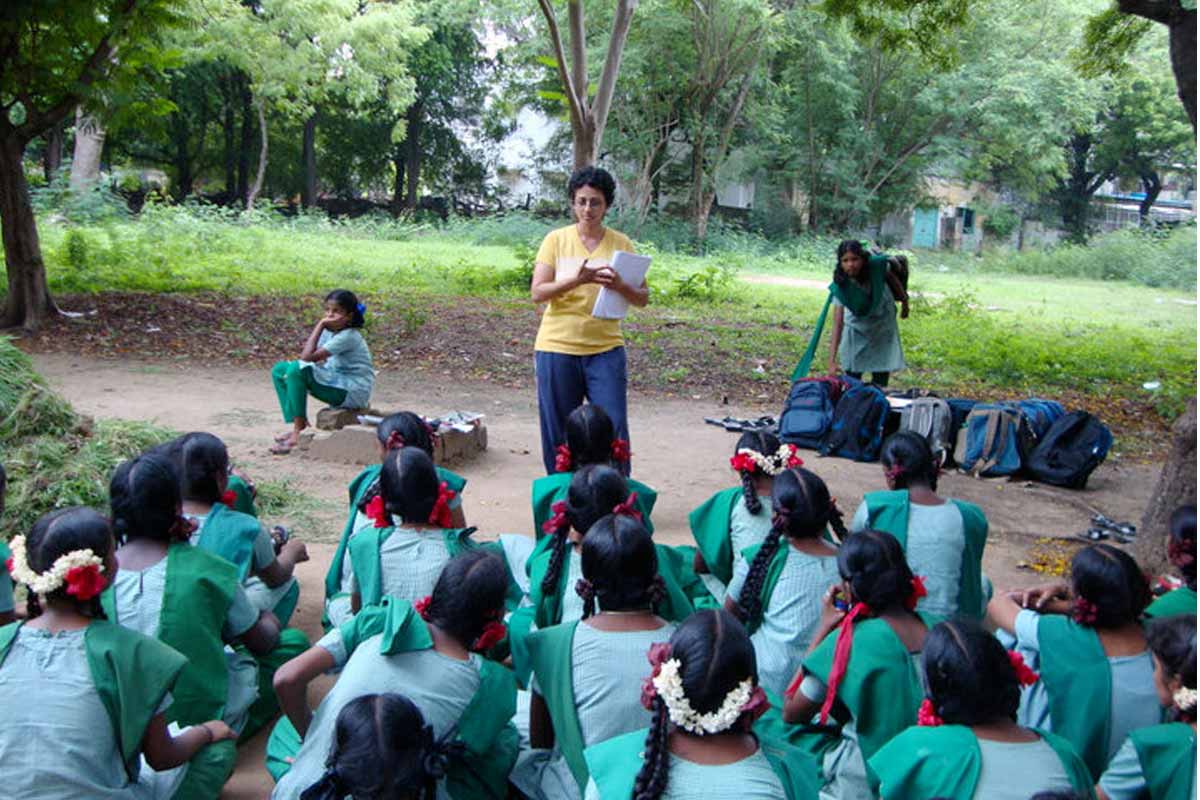
    Paintings that were done by the kids in the craft class with flowers, leaves, sand and paint were hung between two trees in the tree-studded campus of Avvai Home in Adyar. The Aseema Trust in their project “South Indian Girl Child Initiative Project” brought out the third phase “Using Traditional Performing Arts as empowering tools for vulnerable youth” with the theme “Health and Hygiene” for 2008.

    During the summer vacation these children participated in the workshop that had diverse events with the same theme and what they had learned was displayed.

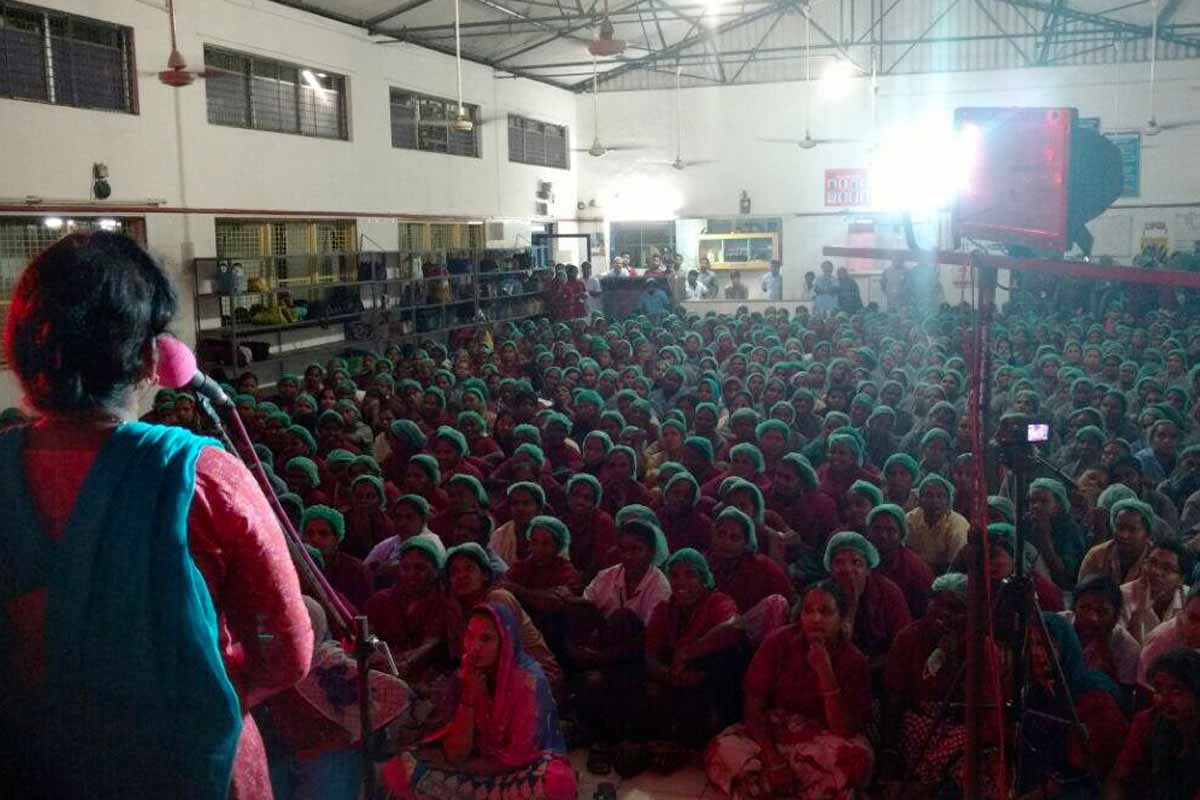
    They began the day’s programme with a song taught by Sudha Raja with a message on cleanliness. Toilets must be built and people taught to use them properly, garbage should be dumped inside the bin and not around it, as pavements are meant for walking, they should be kept clean and free from any kind of obstacles, were some of the messages in the song. As dance is an activity that inspires a person to keep the mind as well as the body clean, the children were taught Mohiniattam by Supriya Rajan. The swaying movements were done with much concentration and the children’s enjoyment was obvious.

    And to sharpen the mind the mathematical way the kids had a taste of Konnokkol by Uma Shankar Vinaykram who had the whole school and the visitors keeping time to the ancient beats. Chandra and Bama who trained the children to put up the play “Nalamdana” — the message again concentrating on hygiene. Sensitive issues like disposing used sanitary napkins, the importance of food and the confidence to make the right choices in life formed the basis of the play.

    The workshop had infused in the children a zeal to keep their environment and themselves clean and healthy in all aspects but their performance that evening had inspired other young minds too as little Suganya said, “We will do all what our akkas said (as in the song and drama) because it will make us strong and make us study too!”


  • The Hindu: The Nowhere Children

    The Hindu: The Nowhere Children

    The nowhere children: http://www.thehindu.com/todays-paper/tp-features/tp-metroplus/the-nowhere-children/article2279982.ece

    BITTER TRUTH Empower children to speak

    The long silence about child sexual abuse seems to be breaking

    2007121350550301_728479e

    You have to live in an opaque, sound-proof bubble to deny child sexual abuse (CSA) exists. Hard-drives of documented cases are available with NGOs working in this field (you don’t want to read them). Reports from the media, UNESCO and the government are awash with evidence. The long silence and denial about CSA seem to be breaking. It is mainstream, occupying public and political space. You can’t argue the need for it.

    Accept it, say the NGOs, and work to protect the child. Know the facts.

    There’s a high percentage of child-trafficking in the sex trade. Paedophiles stalk websites in search of unwary, curious kids. Abusers target unsupervised children of busy parents, children from broken families. Children who run away from home (violence? drunkenness?) are specially vulnerable. Child labourers and street children are easy prey. There is CSA in middle and upper middle-class families; it just goes unreported.

    Activists are taking the matter head-on. The Nalamdana troupe enacts plays to spread awareness. Tulir talks of safety through posters, billboards, illustrated do’s and don’ts in newspapers and advocacy; it works with sexually abused kids and their families, conducts training workshops.

    Currently it’s campaigning for a legal definition of child pornography. Ashraya runs workshops in educational institutions and the Police Training College.

    All of them distribute informative flyers and booklets among schools. Rotary Club has Project Selvi.

    Language is an important component.

    “It’s a sensitive topic,” said Nitya Balaji of Nalamdana. “So programmes have soft names – safe child, life skill teaching, adolescent health program. Do we talk to children about their physical and emotional changes in a scientific way?” Vidya Reddy of Tulir wants “shame” removed from the child’s awareness of his body. “Terms should be simple and age appropriate. Saying, ‘Don’t allow anyone to touch you,’ puts the burden of responsibility on the child. Say, ‘It is not all right for anyone to touch you except for medical reasons.’ Empower children. Their reporting is necessary to ensure their safety.”

    Who is an abuser?

    There are no psychological tools to profile them. “He could be the “nice” uncle in a stormy home,” said Nitya. “There are far more people with sexual interest in children than we can count,” warned Vidya. Abuse takes several forms and can happen under a parent’s gaze. Tickling and hugging can be unsafe for the child. “Abusers are manipulative and clever and abuse often goes on for years.” All children are at risk.

    At what age should kids know?

    “Good touch and bad touch at the primary level,” said Nandi Shah of Ashraya. “Body parts and functions at secondary, then sexuality, right to privacy, safety and choice. Parents, teachers, care-givers and counsellors should be sensitised and trained to support.” Nitya said, “People will take what they’re capable of. We should impart information in a non-sensational way.”

    How does theatre help?

    “Theatre has variety- such as role play, puppetry, story telling,” said Nitya. “Children could choose the issues, perform in different languages. Scripts could be based on first-hand stories. Theatre is most effective in schools with children from challenged homes/backgrounds.” A pre and post performance questionnaire gives direction to Nalamdana’s work. “But counselling by experts must follow.”

    What can we do?

    Nitya wants a children’s forum. “If children are trained to retort in groups, the abuser will be kept at bay. Why can’t TV serials mainstream the issue?” Ready and quick help when they need it, said Nandi. “Tell the abused child it is not her fault,” say activists. Listen when they complain, or they’ll clam up. The abuser is often someone the child loves and trusts or a person in authority. “Take it seriously, without showing alarm or distress,” said Vidya. “Respond calmly and do something about it.”

    “Parents should create an atmosphere where the child feels free to talk without fear of ridicule or criticism. Schools must be pro-active on protection against abuse.

    We need clear, stern laws and a child-friendly investigating system. Or we victimise the child many times over.”
    GEETA PADMANABHAN

  • The Hindu: Shrill Voices, Sweet Music, and HIV Education

    The Hindu: Shrill Voices, Sweet Music, and HIV Education

    http://www.thehindu.com/todays-paper/tp-national/tp-tamilnadu/shrill-voices-sweet-music-and-hiv-education/article1961707.ece

    Shrill voices, sweet music and HIV education

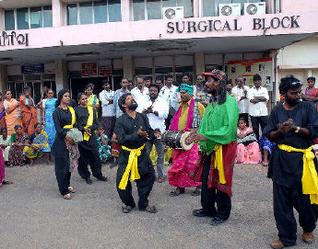
    Speaking up: A street play to create awareness about AIDS prevention being staged at the Government Stanley Hospital in Chennai on Tuesday.

    Staff Reporter

    Street play conducted in Government Stanley Hospital

    2007120559800201_615492eCHENNAI: The usually silent Government Stanley Hospital reverberated with shrill voices and music interspersed with laughter on Tuesday evening.
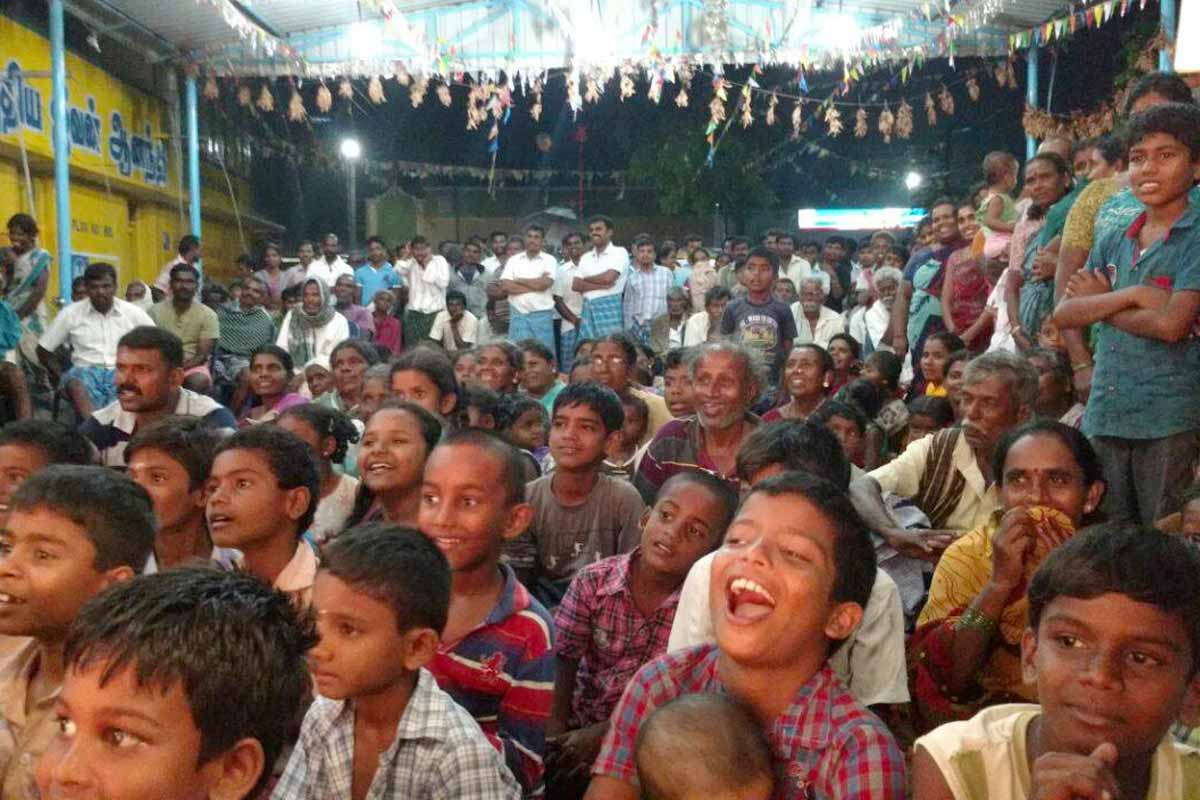
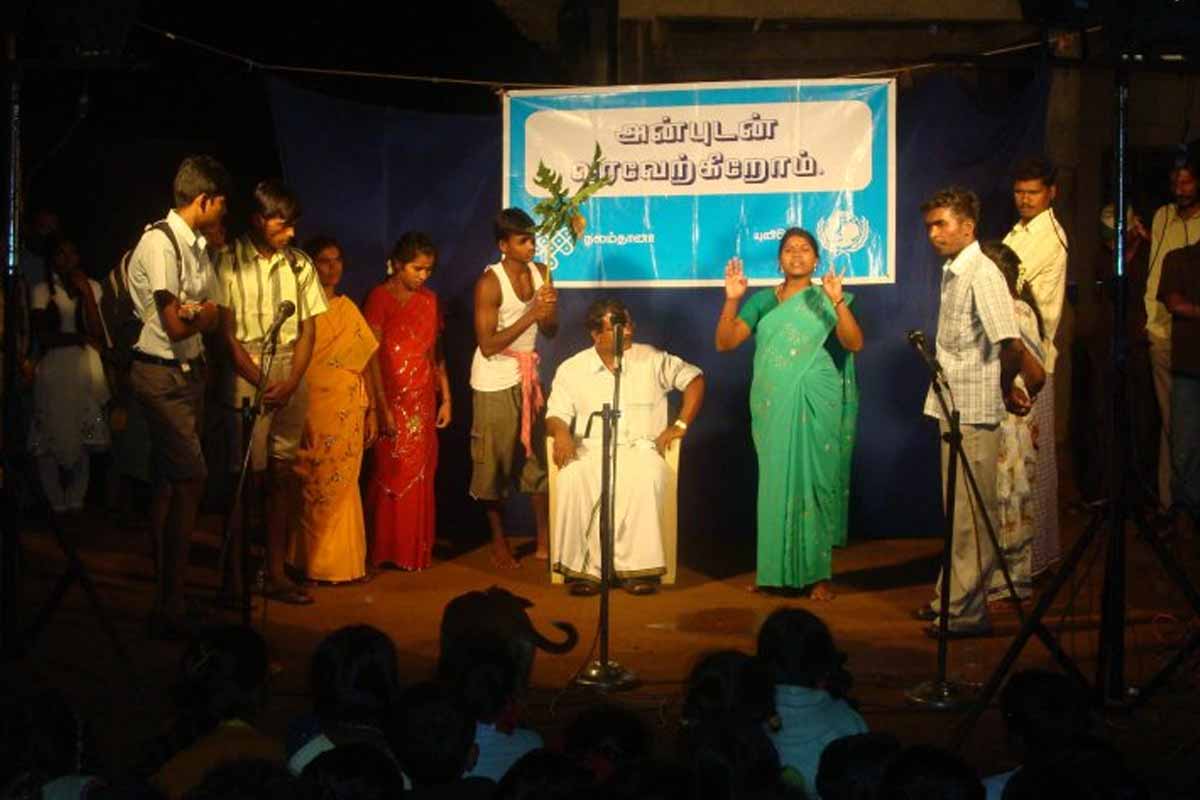
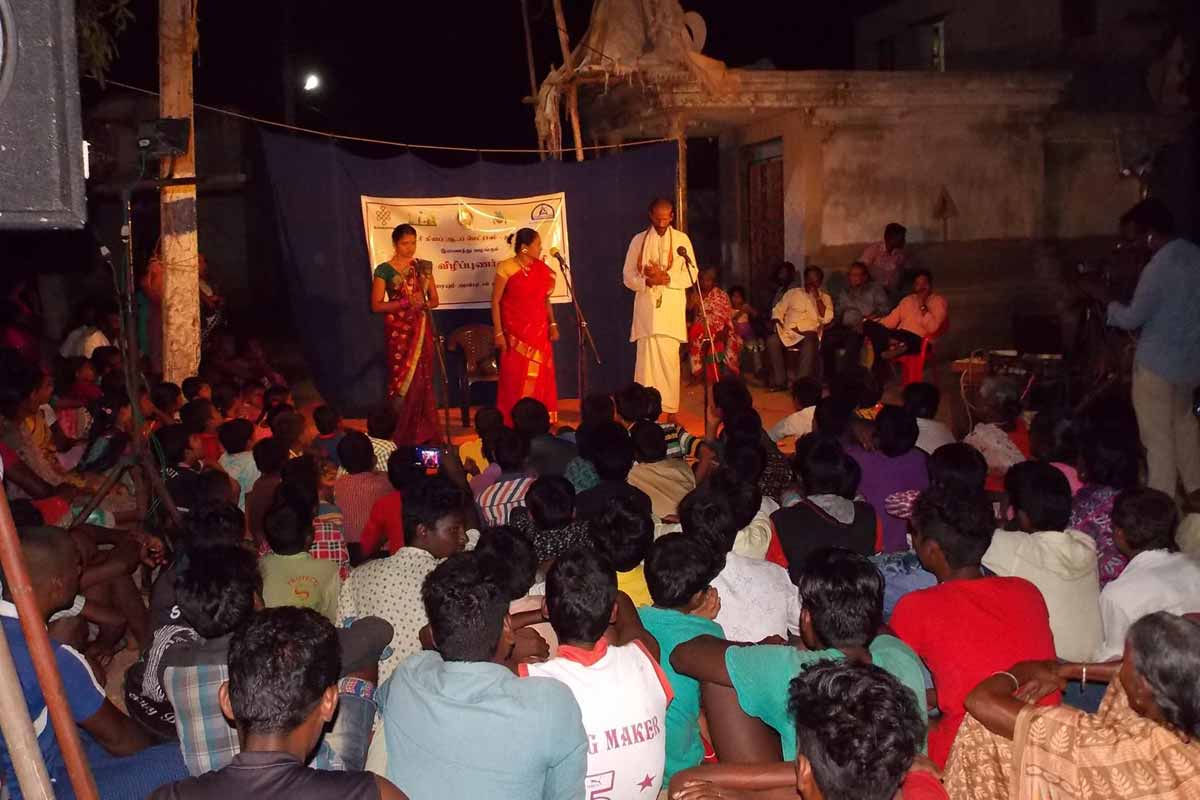
    A street play conducted at the hospital drew the scattered crowd there to learn about HIV prevention during a health education programme.

    The 20-minute play was centered around two families with members affected by HIV and sexually transmitted diseases and their ignorance about the treatment available.

    The staging of the play was one of the initiatives to create awareness of HIV/AIDS and to dispel myths.

    The programme was jointly organised by the Tamil Nadu State AIDS Control Society, Department of Transfusion Medicine of Stanley Medical College and Hospital, and Nalamdana Charitable Trust. Besides elaborating on the reasons for the spread of HIV, the artists also sought to create awareness of the treatment and free consultation provided at hospitals.

    At the end of the street play held on the hospital premises doctors and counsellors responded to queries posed by the audience.

    N. Rajakumar, head of the Department of Transfusion Medicine, Government Stanley Hospital, said such programmes on various issues were to be organised every month to reach those who attended to the patients at the hospital and to those who come to visit the patients.

    Voluntary blood donation would be the theme for the street play to be enacted next month.

    Pamphlets and feedback forms would also be distributed on the occasion.

    This is the first initiative taken to create awareness among visitors to government hospitals, he added.

    TANSACS project director Supriya Sahu and dean of Stanley Medical College and Hospital Mythili Bhaskaran were present on the occasion.

  • Exhibition to benefit Nalamdana: Images from Bangladesh, India, Ethiopia and Tanzania

    Exhibition to benefit Nalamdana: Images from Bangladesh, India, Ethiopia and Tanzania

    October 1 – 31, 2007 

    Anandam: Images from Bangladesh, India, Ethiopia and Tanzania
    An Exhibition of Photographs by Beth D. Weinstein to benefit Nalamdana.
    $1000 was raised for Nalamdana. For more information or to order prints, contact Beth Weinstein.
  • The Hindu: Novel AIDS campaign all set to roll

    The Hindu: Novel AIDS campaign all set to roll

    M. Dinesh Varma

    Street plays, slide shows and top-down training initiatives in corporate houses planned

    CHENNAI: A canny mix of fundamental and out-of-the-box communication strategies will push a month-long HIV/AIDS awareness campaign being launched by Scope International, a subsidiary of Standard Chartered Bank.

    A stilt-walk on Nungambakkam High Road to highlight the red ribbon cause marked the start of a sustained drill to get people to pause and think about HIV/AIDS. More is to follow in the form of street plays, slide shows for cinema halls and top-down training initiatives in corporate houses.

    `Living with HIV’, one of the two major Corporate Social Responsibility Initiatives identified by the organisation, will reach out to a cross-section of people over the next month or so with a communication strategy ranging from street theatre to college visits and slide shows for film audiences.

    “One of our focus groups will be women and children infected or affected by HIV/AIDS,” said Shashi Ravichandran, who heads Scope’s Corporate Affairs in Chennai. Most women infected by spouses have no support mechanisms, to compound the social scorn. Scope plans to help such women put their lives back on the rails and also provide for their children’s education.

    Scope has partnerships with NGOs such as Nalamdana and Positive Women Network to spread messages on HIV/AIDS in peripheral communities around the city.

    Corporate houses are an important port of call for the resource persons at Scope who have been groomed as trainers in HIV/AIDS education. The employee base in most companies, especially in the IT sector, is not only vast but also young. It is absolutely vital to put across to this vibrant segment of the workforce the right messages of what HIV/AIDS is and what it isn’t, said Ms. Ravichandran

  • The Hindu: Earthwatch Volunteers in Chennai with Nalamdana

    The Hindu: Earthwatch Volunteers in Chennai with Nalamdana

    http://www.thehindu.com/todays-paper/tp-features/tp-metroplus/new-place-new-experience/article3187165.ece

    New place, new experience
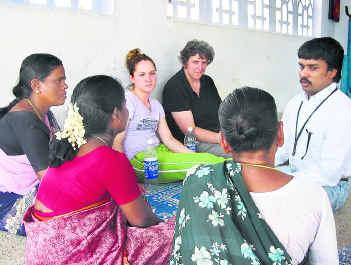
    CHANGING LIVES Earthwatch volunteers at an interactive session

    What was it like for the volunteers from different countries to work for an NGO in Chennai?

    2006021102360801_999172gMary Velez, a retired nurse and educator from Chicago, Ann Micka, a college student from Boston, Barbara Fallis, physician from Orillin, Canada, and Sara Monajem, professor, Public Health, Zurich, Switzerland, met and made friends in Perungudi, Chennai. They were here as volunteers for Maternal and Child Healthcare – India, a research project proposed by Nalamdana, a Chennai-based NGO, and approved by Earthwatch Institute, a Boston-based organisation that, well, watches the earth.It’s a happy marriage. Volunteers sign up for one of Earthwatch’s projects, pay the cost of participation and travel to the country to work for two weeks with a principal investigator and his/her team. Their contribution helps meet the cost of the fieldwork, and their skills and experience add to the project outcome. Volunteering for Earthwatch gives the groups a hands-on experience as opposed to a touristy one.

    Varied tools

    Nalamdana uses communication tools such as street plays, audio tapes and tele-films to take messages (on AIDS, hygiene, nutrition, leadership, domestic violence) to the community it targets. It does research, gathers data during the outreach programmes and shares them with local NGOs and hospitals for remedial work. When we met, the group had seen five Nalamdana theatre performances in places ranging from peri-urban Chennai to coastal fishing hamlets and worked in two urban pilot projects. They talked about their trip.Mary: I’ve been volunteering with Earthwatch for some years now. India looked like an intriguing place with a very different culture. I had read books but didn’t know what to expect from the Nalamdana project. In Chennai, I attended a Rotary Club meeting, heard music by Global Rhythms. In the field, took crowd attendance, broke it down gender-wise and added inputs to the questionnaire given before and after the performance. Barbara: I had read novels like “A Fine Balance” and “God of Small Things”. Canadian schools teach world history, so we do have authentic info on India. A big attraction is English. We viewed videos to understand the work, visited a day care centre nearby. During the tour, we sent out questionnaires and tabulated the responses. I spoke to four members of an adolescent group and did a Q & A session for the staff. I also spent time at an ICCW office, Nalamdana’s local partner. It’s hard to assess my contribution but it’s an overwhelming experience.Ann: My acquaintance with India comes from “Monsoon Wedding” and friends who have been in north India. I’ve brought with me curiosity about nutrition research. I joined a city college group doing a dietary profile in Illalur, helped them teach nutrition habits to the communities there. I must tell you about the cultural shock I had! The college girls talked of applying to Purdue and Cornell for higher studies and said, “If we don’t get in we’ll get married!” That is an amazing choice! For them staying away from home is a big event. I loved this cultural exchange. I taught them break-the-ice games that the staff found very useful. Sarah: I was influenced by Amartya Sen’s words, “Everything you say about India, the opposite is also true”. I took part in the entertainment, but don’t call it singing, prepared a lesson plan, talked to an adolescent group on oral health. I prepared abstracts for a project and am helping with the presentation. It’s fascinating that you take back to communities traditional knowledge of food and medicine. Don’t feel left out. Nithya Balaji, Executive Trustee, Nalamdana is constantly looking for local partners, local college students to work with her as volunteers, local funding support for the numerous pilot interventions planned in this project. “Isn’t volunteering while holidaying an exciting prospect?”The group will carry, among others, one thought etched in wonder: None of them had seen or heard of teaching-based street entertainment. “It is amazing,” said Dr. Barbara Fallis. “Large village communities watch the popular plays. They take in a lot of information.” Added Mary, “A bit of music, a bit of light, one backdrop and there was positive reaction.” Sarah is “incredibly impressed with the staff”. “They do everything, write the script, gather the crowds, perform, organise accommodation. It’s a great way to communicate.”GEETA PADMANABHAN